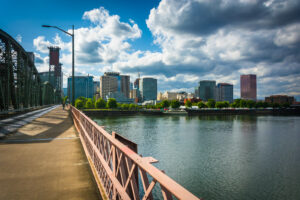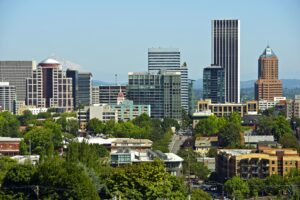
Portland, Oregon, is a city defined by contrasts. It combines an energetic urban culture with immediate access to forests, rivers, mountains, and public parks. Known for its independent businesses, creative communities, and strong connection to the natural environment, Portland offers a distinctive experience for residents and visitors alike.
A City Surrounded by Nature
One of Portland’s defining qualities is its proximity to the outdoors. The Willamette River runs through the city, while the Columbia River forms part of its northern boundary. Forest Park, one of the largest urban forest reserves in the United States, provides an extensive network of trails within minutes of downtown.
Beyond the city, travelers can reach the Columbia River Gorge, Mount Hood, and the Oregon Coast by car. These destinations make Portland an effective base for hiking, cycling, skiing, camping, and scenic day trips throughout the Pacific Northwest.
Distinctive Neighborhoods
Portland is best experienced through its neighborhoods. Each district has its own character, commercial areas, restaurants, and community spaces.
The Pearl District is known for converted warehouses, galleries, modern residences, and upscale dining. Alberta Arts District features murals, independent shops, performance spaces, and an active creative scene. Hawthorne Boulevard offers vintage stores, cafés, bookstores, and casual restaurants, while Mississippi Avenue combines historic architecture with newer entertainment and dining establishments.
These neighborhood centers contribute to Portland’s decentralized character. Visitors do not need to remain downtown to experience the city’s most memorable places.
Food, Coffee, and Craft Culture
Portland has developed a strong reputation for food and beverage innovation. Its culinary scene includes established restaurants, farmers’ markets, bakeries, breweries, coffee roasters, and food-cart operations serving cuisines from around the world.
Food-cart pods are a particularly recognizable part of the city. These shared locations bring multiple independent vendors together, giving customers access to varied menus in a casual setting. Portland’s coffee culture is equally prominent, with many businesses emphasizing local roasting, careful sourcing, and small-scale production.
Craft breweries, urban wineries, and distilleries also contribute to the city’s identity. The emphasis is often placed on experimentation, regional ingredients, and direct relationships between producers and customers.
Arts, Books, and Independent Businesses
Portland supports a broad creative economy that includes visual art, music, publishing, design, film, and handmade goods. Galleries, theaters, music venues, studios, and community events provide platforms for both established and emerging artists.
The city is also closely associated with independent bookstores and small retailers. These businesses reinforce Portland’s reputation as a place where local ownership and specialized products remain important. Markets and pop-up events frequently showcase ceramics, clothing, jewelry, prints, food products, and other locally produced items.
Sustainability and Transportation
Environmental awareness is visible throughout Portland. The city has invested in public transportation, cycling infrastructure, walkable commercial areas, parks, and community-based sustainability programs.
Portland’s transportation network includes buses, light rail, streetcars, bicycle routes, and pedestrian-friendly areas. Although access and convenience vary by neighborhood, many central districts can be explored without relying exclusively on a private vehicle.
The city’s sustainability culture also influences consumer behavior. Recycling, reuse, locally sourced products, plant-based dining, and environmentally responsible business practices are common themes across Portland’s commercial and residential communities.
When to Visit
Portland experiences distinct seasons. Spring brings flowering trees and gardens, while summer generally offers warmer and drier conditions suited to outdoor events and regional travel. Autumn is marked by cooler temperatures and changing foliage. Winter tends to be wetter, creating a quieter atmosphere for museums, cafés, bookstores, and indoor cultural activities.
The ideal time to visit depends on the planned experience. Summer is well suited to hiking, festivals, and outdoor dining. Spring and autumn provide moderate conditions and seasonal scenery. Winter can appeal to travelers who prefer fewer crowds and a more relaxed pace.
A City with a Clear Identity
Portland’s appeal does not depend on a single attraction. Its character comes from the combination of neighborhood culture, independent enterprise, environmental access, and creative expression. The city invites visitors to explore gradually—through local restaurants, public parks, small businesses, cultural venues, and the surrounding landscape.
For travelers seeking a destination that balances urban experiences with outdoor access, Portland offers a practical and memorable introduction to the Pacific Northwest.